Punjab Farm Stay Policy 2026: LIGH vs. Farm Stay — What's Live, What's Stayed, and What to Verify Before You Buy

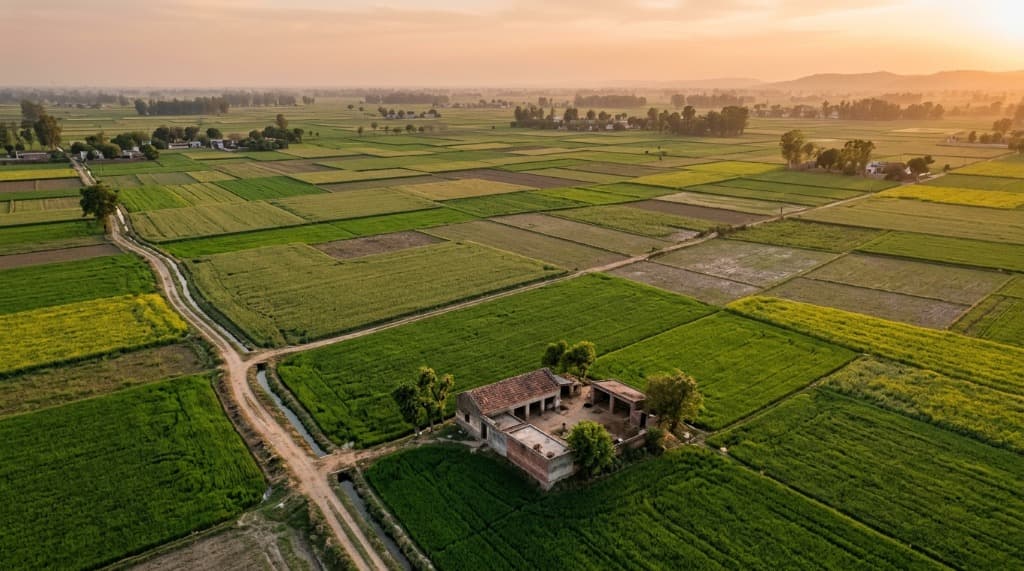
If you are planning to buy land for a farm house in Punjab, here is the short version: there are currently two different government policies governing this, not one evolving into the other, and only one of them is actually moving right now. The Low Impact Green Habitats (LIGH) policy from 2025, which created a 4,000 sq yard plot category, is sitting under an active National Green Tribunal stay that specifically touches land in Mohali and the surrounding Shivalik-belt districts. The separate Farm Stay Policy 2026, run by Punjab's Tourism Department, is live and processing applications — but it requires a full 1-acre plot and mandatory tourism activity, not a 4,000 sq yard residential plot. Treating the 2026 policy as simply an "upgraded LIGH" is the single biggest mistake buyers are making right now.
Here is how this actually evolved, where each track stands today, and what it means if you are buying now.
Watch the video breakdown: Punjab Farm House Policy 2026
How Did Punjab's Farm House Policy Start?
In 2009, the Forest Department delisted close to 1.4 lakh acres of land from forest classification. The intent was straightforward: hand this land to farmers for agriculture, support rural livelihoods, and develop the rural belt. As part of this, anyone holding 2.5 acres was permitted to construct one farm house on it, strictly for agricultural use.
That same delisted land — roughly 55,000 hectares across Mohali, Ropar, Shaheed Bhagat Singh Nagar, Hoshiarpur, Gurdaspur, and Pathankot — is the land now at the center of the litigation described further down this page. The single approval clause from 2009 is where the story changes direction.
Why Did Farm Houses Become a Commercial Trend Instead of an Agricultural One?
The 2.5-acre approval was written for farming. What people actually wanted was something different: a personal patch of green, away from rising pollution and rising land prices in the cities. Punjab's urban land rates were climbing fast, air quality was worsening, and an open, quiet property started to look less like a luxury and more like a need.
So the agricultural approval got repurposed. Farm houses stopped being functional agricultural structures and became weekend retreats, then investment assets, then in some cases unregistered colonies built by private individuals on land that was never approved for that use. By the time this trend matured, the construction had drifted far from the original intent of the policy, and that gap is exactly what invited regulatory scrutiny.
Why Are NGT and the Supreme Court Involved?
Because the underlying land was delisted from forest protection for bona fide agricultural and livelihood use, not for residential or commercial construction, the government's attempt to formally regularize farm house construction on it — through the LIGH policy — triggered a legal challenge almost immediately.
In December 2025, the National Green Tribunal granted an interim stay on LIGH after a petitioner argued the policy contradicted Supreme Court directions on how this delisted land could be used. That stay has since been extended, with the next hearing set for July 21, 2026 — and a related petition has specifically put Mohali's land demarcation records under scrutiny alongside four neighboring districts. The Supreme Court's Central Empowered Committee has separately sought details from the state government on the extent of delisted land and the relevant court orders.
This is why the issue is live, not historical: the mechanism that was supposed to let older, unregularized 2.5-acre farm houses get formally approved — LIGH — is, as of today, on hold. If you own an old farm house waiting on regularization, or you're looking at a new LIGH-category plot, you are both waiting on the same litigation.
What Is the 2025 Low Impact Green Habitat Policy?
LIGH was issued by Punjab's Housing & Urban Development department to create a smaller, more controlled plot category instead of the 2.5-acre threshold: a 4,000 sq yard plot category, with specific conditions:
- Only 10 percent of the plot can be used for construction
- No basements are permitted
- Construction is limited to ground floor plus first floor
Current status: this is the policy under the NGT stay described above. Until the litigation resolves — at the earliest, after the July 21, 2026 hearing — new approvals and regularizations under LIGH are not moving forward in the affected districts, Mohali included. Anyone being sold a "LIGH-approved" plot in this belt right now should ask exactly how that approval was obtained given the stay.
What Does the 2026 Farm Stay Policy Actually Cover?
In 2026, Punjab's Department of Tourism & Cultural Affairs introduced a related but legally distinct scheme: the Farm Stay Policy 2026, replacing an older 2021 framework. It's easy to assume this is just an upgraded LIGH, but the two are run by different departments, use different land thresholds, and currently sit on very different legal footing.
Under the Farm Stay Policy 2026:
- Minimum plot size is 1 acre, not 4,000 sq yards
- At least two hands-on rural/tourism activities must be offered to guests — this is a working farm-stay business, not a private residence
- You can construct between 2 and 9 rentable rooms, capped at 18 guest beds total
- Construction is limited to 10 percent ground coverage, two storeys, and a 9-metre height cap
- The government offers a CLU (Change of Land Use) fee exemption
- Registered units can access a capital subsidy of up to 10 percent of fixed capital investment (capped around ₹50 lakh), 75 percent reimbursement of net State GST, up to ₹20 lakh toward environmental and quality certification costs, and domestic (not commercial) electricity tariff rates
- Applications and renewals run through the Fast Track Punjab Portal — not the general Invest Punjab investment site, which is a different portal entirely
Unlike LIGH, the Farm Stay Policy is not currently subject to the NGT stay — it is active and processing registrations. That said, environmental groups have publicly criticized it as a parallel route into the same Shivalik-belt land that LIGH is currently blocked from touching, so continued scrutiny here is reasonably likely.
Are LIGH and the Farm Stay Policy the Same Thing?
No — and treating them as one policy is the most common and most costly mistake buyers are making right now. They differ on every dimension that matters to a buyer:
| Parameter | Original 2.5-Acre Farm House (2009) | LIGH Policy (2025) | Farm Stay Policy (2026) |
|---|---|---|---|
| Administering department | Forest Department (original approval) | Housing & Urban Development | Tourism & Cultural Affairs |
| Land size | 2.5 acres | 4,000 sq yards | 1 acre minimum |
| Stated purpose | Agriculture | Low-impact residential habitat | Farm stay / rural tourism, with mandatory guest activities |
| Construction limit | Not capped originally | 10% of plot, ground + first floor, no basement | 10% ground coverage, two storeys, 9m height cap |
| Commercial use | Not approved, happened informally | Residential exemption only | Explicitly approved — 2 to 9 rentable rooms, 18-bed cap |
| Current legal status | Many unregularized, demolition risk remains | Under NGT interim stay since Dec 2025, extended to a July 21, 2026 hearing — approvals paused in affected districts, including Mohali | Active, not subject to the LIGH stay, but criticized by environmental groups as a parallel route into the same land |
| Approval route | Manual, multiple departments | Currently stalled during litigation | Online via Fast Track Punjab Portal |
| Financial incentives | None | CLU exemption (when active) | 10% capital subsidy (up to ~₹50 lakh), 75% SGST reimbursement, electricity tariff benefit, certification cost reimbursement |
This is precisely why an old farm house, a LIGH-category plot, and a Farm Stay-eligible plot cannot be evaluated with the same checklist. They sit under three different approvals, with three different legal positions as of today.
If you already own an older 2.5-acre farm house and are unsure whether it is regularized, or you are deciding between a LIGH plot that is currently stalled and a Farm Stay plot that is active but requires a full acre and tourism use, this is exactly where an independent advisory conversation saves you from a costly mistake. WhatsApp directly for a quick answer: 917814613916.
What Should You Verify Before Buying Farm House Land in Punjab?
Before you commit money to any farm house plot, confirm the following:
- Which policy actually applies. Is this being sold to you as a LIGH plot (currently stalled by an NGT stay) or a Farm Stay-eligible plot (active, but requiring a full acre and tourism activity)? Sellers sometimes blur this distinction, intentionally or not.
- Land classification on record. Is the land genuinely under the policy category you're being told, or is the approval simply assumed?
- NGT and Forest Department compliance. If the plot is in the LIGH category, has it been affected by the current stay, and what does the seller's documentation actually show?
- Construction limits on paper. Confirm the ground coverage, floor, and height limits match what's being promised by the seller or developer.
- CLU and registration status. For Farm Stay-eligible plots, has the CLU exemption and Fast Track Punjab Portal registration actually been processed, or is it assumed?
- Drainage, sewerage, and water harvesting compliance. These are not optional add-ons under either policy. They are conditions of the approval itself.
Skipping this verification is how buyers end up with money tied up in land they cannot legally use the way they intended — which is the exact outcome the original 2.5-acre buyers are still dealing with.
Frequently Asked Questions
Is the Punjab farm house policy currently active? Partly. The Farm Stay Policy 2026 is active and accepting applications through the Fast Track Punjab Portal. The separate LIGH 2025 policy is under an NGT interim stay extended to a July 21, 2026 hearing, so approvals and regularizations under LIGH are currently paused in the affected districts, including Mohali.
What is the difference between the LIGH policy and the Farm Stay Policy 2026? LIGH is a Housing & Urban Development department policy for low-impact residential construction on 4,000 sq yard plots. The Farm Stay Policy 2026 is a separate Tourism Department scheme requiring a minimum 1-acre plot and active tourism use, with its own subsidies and a different approval portal.
Does the NGT stay on LIGH affect land in Mohali? Yes. A petition challenging the LIGH policy specifically named Mohali among the districts where demarcation of delisted forest land is being disputed, and the NGT has directed Mohali's deputy commissioner, along with four others, to submit relevant records.
What subsidies are available under the Farm Stay Policy 2026? Registered units can access a capital subsidy of up to 10% of fixed capital investment (capped around ₹50 lakh), 75% reimbursement of net State GST, up to ₹20 lakh toward environmental and quality certification costs, and domestic electricity tariff rates instead of commercial rates.
How many rooms can I build under the Farm Stay Policy? Between 2 and 9 rentable rooms, with a total cap of 18 guest beds, and construction limited to 10% ground coverage across two storeys with a 9-metre height limit.
Which portal handles farm house and farm stay applications in Punjab? Farm Stay Policy 2026 registrations and approvals run through the Fast Track Punjab Portal. This is a separate system from the general Invest Punjab investment promotion site, which is not the application route for this scheme.
The Bottom Line
Punjab's farm house landscape currently has three layers, not one smooth progression: an original 2.5-acre agricultural approval that left many older farm houses unregularized, a 2025 LIGH policy meant to formally regularize and create a smaller plot category that is currently frozen by an NGT stay extended to at least July 21, 2026, and a separate, active 2026 Farm Stay Policy that offers real commercial upside on a full-acre plot with mandatory tourism use. The opportunity is genuine, particularly through the Farm Stay route for buyers willing to meet the 1-acre and activity requirements. But none of this holds if you don't first confirm which of these three tracks your specific plot actually falls under, and whether it sits inside the area currently affected by litigation.
If what you read here describes your situation, one 15-minute call is enough. I will tell you directly what I would do in your position. No pitch, no pressure, just the answer. Book a call or WhatsApp directly.
Related Reading
- Punjab Land Area Calculator & Measurement Chart
- Property Rates in Mohali 2026: GMADA, Chandigarh & Aerocity Guide
- Pre-Launch Property in Mohali: Risk vs Reward
- Mohali Real Estate Investment Strategy 2026
Amritpal Singh is the founder of Realty Holding & Management Consultants, E328, Phase 8A, industrial area, Mohali. With over 10 years across real estate development, government liaisoning, capital markets, and media, he has personally closed 180+ transactions across all property categories in Punjab. AMFI and NCFM certified.
Planning a property purchase in Mohali?
Use our free EMI Calculator for Mohali property to estimate your monthly payments before you visit the site →
Chat with an Advisor on WhatsApp →